On the Anniversary of Nakba.. Muslim Brotherhood and Path of Liberation – From Resistance to Renaissance
In the name of Allah; praise be to Him; and blessings and peace be upon the Messenger of Allah, Prophet Mohamed (PBUH), and upon his followers.
Allah Almighty says: ﴾… Indeed, Allah will not change the condition of a people until they change what is in themselves…﴿ (Al-Raad: 11).
When the martyred Imam Hassan al-Banna reflected upon the conditions of the Muslim nation and the domination of colonial powers over its lands and resources, he affirmed that the liberation of the Islamic homeland from every form of foreign domination – whether political, economic, or spiritual – is a natural right denied only by an unjust tyrant or oppressive despot; asserting that true independence cannot be complete except through the establishment of a free and just state governed by the principles of Islam, serving the nation rather than domineering over it.
In his treatise ‘Between Yesterday and Today’, Al-Banna stated “Always remember that you have two fundamental objectives:
1. To liberate the Islamic homeland from every foreign authority, whether political, economic, or spiritual; and this is a natural right denied only by an unjust tyrant or oppressive despot.
2. To establish in this free homeland a free Islamic state that operates based on the provisions of Islam, applies its social system, proclaims its noble principles, and conveys its wise message to mankind.”
Based on this understanding, Palestine –with Jerusalem and Al-Aqsa Mosque at its core– was regarded as an inseparable part of the greater Islamic homeland, the nation must neither abandon its rights nor remain silent towards threatening it with loss and usurpation.
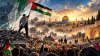
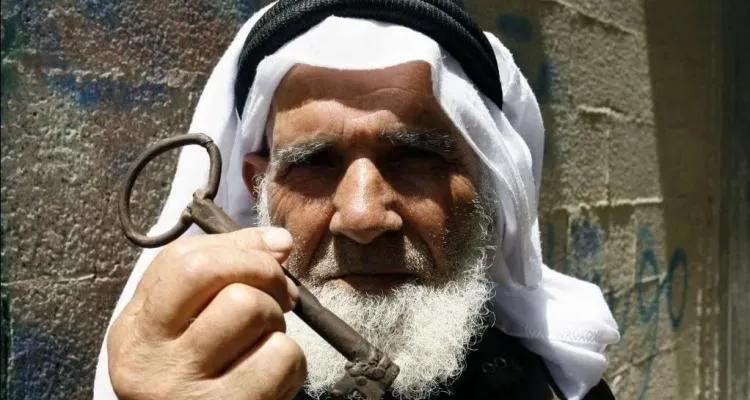
As we today mark the seventy-eighth anniversary of the Nakba of Palestine, we recall that great historical crime committed by the armed Zionist gangs, supported by Western colonial powers, against the Palestinian people and the Muslim nation as a whole. Where these gangs practiced killing, displacement, terror, massacres, and the forced expulsion of hundreds of thousands of Palestinians in 1948, and established a usurping entity that remains a source of pain, destruction, and instability to this day.
In fact, what occurred yesterday in the form of a brutal storming of the Al-Aqsa Mosque and the violation of its sanctities on the very anniversary of the Nakba itself confirms that the Nakba is not merely an event of the past, but an ongoing aggression targeting the land, the people, and the holy sites.
Liberation in the Islamic Conception: A Duty and a Necessity
A reflective reading of the verses of the Holy Quran makes clear that Islam came to liberate humanity from every form of servitude to anything or anyone other than Allah: from servitude to desires, from subjugation to human beings, and from every authority that strips man of his dignity and free will.
Allah Almighty says in Surat Al-Isra: ﴾And We have certainly honored the children of Adam... ﴿ (Al-Isra: 70). And He also said in Surat Al-Anbiya: ﴾And We have already written in the book [of Psalms] after the [previous] mention that the land [of Paradise] is inherited by My righteous servants. ﴿ (Al-Anbiya’: 105)
Thus, liberation in the Islamic conception is not merely a political option or a temporary stance, but a religious obligation and a human necessity, because it is tied to removing oppression and supporting the oppressed, as Allah Almighty says in Surat Al-Nisa’: ﴾And what is [the matter] with you that you fight not in the cause of Allah and [for] the oppressed among men, women, and children… ﴿ (Al-Nisaa: 75)
Accordingly, resistance of occupation and domination is not merely a legitimate right, but a duty mandated by the objectives of Islamic law and affirmed by the laws of human civilization; for nations that fail to defend their freedom and dignity lose their ability to survival and influence.
Liberation in the Thought of the Muslim Brotherhood
From this perspective, liberation in the thought of the Muslim Brotherhood is both a creed and a necessity, not merely a political slogan or a temporary reaction. In this conception, liberation is not the starting point, but rather the fruit of an integrated project that begins with building the individual, extends to the renaissance of society, and culminates in the liberation of the homeland and the safeguarding of its independence.
The battle for liberation, in reality, begins within the human being: with awareness, faith, the ability to bear the burdens of freedom, patience upon its long path, and steadfastness until Allah’s promise is fulfilled.
How Did Imam Al-Banna Understand the Cause of Liberation?
Imam Al-Banna did not approach liberation merely as a military confrontation, but rather as a complex struggle involving political, economic, and cultural dimensions.
In his view, colonialism was not merely the occupation of land; it was political domination that confiscates decision-making, economic domination that drains wealth, and cultural and spiritual domination that colonizes minds before territories.
Thus, his goal was to build the capacity for liberation and ensure its sustainability, rather than merely seeking achievement of a temporary victory.
Why Did Imam Al-Banna Place the Liberation of the Homeland Fourth?
Within his “Message of Teachings”, specifically the ‘Pillar of Action’, Imam Al-Banna placed “liberating the homeland” in the fourth rank, stating: “And then the liberation of the homeland by freeing it from every foreign – non-Islamic – authority, whether political, economic, or spiritual.”
Some may ask: Why was the liberation of the homeland placed in the fourth rank? The answer is that this arrangement was not meant to be a sort of delay, but rather a foundation: as three major stages preceded the liberation of the homeland, namely:
First, reforming the self,
Next, building the Muslim family,
Then, guiding the society.
For true liberation cannot be achieved by a person internally defeated, nor by a fragmented family, nor by an unaware society. Rather, it is achieved by a believing individual, a stable family, and a conscious society capable of undertaking the project of liberation and protecting it after its realization.
Awareness of Hardship… and Certainty of Victory
Imam Al-Banna concluded his discussion of the ‘stages of action’ by saying: “How heavy are these burdens, and how great are these tasks… Yet we shall never despair, for our hope in Allah is immense.”
These words embody a clear methodology that combines two essential principles: A profound awareness of the difficulty of the path – that it is neither easy nor short – and an unwavering certainty that victory is possible when its causes are fulfilled. In fact, victory comes from Allah, and whoever is with Allah, Allah will grant him victory, even if his supporters are few.
It is a spirit that knows no despair, deriving its steadfastness from faith that victory accompanies patience, and that relief emerges from the depths of hardship.
Palestine… The Beginning That Never Ended
This understanding was not merely theoretical or emotional rhetoric. From the very founding of the Muslim Brotherhood, Imam Al-Banna recognized that Palestine was not simply a border dispute, but the cause of an entire nation.
Therefore, he did not suffice with delivery of speeches and statements; rather, he worked to mobilize the people, awaken the nation, collect donations, prepare men, and send fighters there.
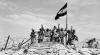
Then came the 1948 war as evidence of the transition from theory to practice. Yet this was not the end of the road, but the beginning of a path extending across generations.
The Muslim Brotherhood and Supporting the Will for Liberation and Independence
Within this vision, the Muslim Brotherhood established the Department of Communication with the Islamic World as a channel to support the struggles of peoples and advocate for Muslim causes in various countries.
However, their efforts were not limited to Palestine: In Egypt, they participated in resisting the British occupation. Mohamed Mahdi Akef was among those who led training camps at Ibrahim Pasha University (currently Ain Shams University), helping prepare a generation that confronted the occupation under the leadership of martyrs such as Youssef Talaat and Sheikh Mohamed Farghaly and others.
During the Tripartite Aggression against Egypt in 1956, despite the imprisonment and torture faced by members of the Brotherhood, they sent a message to the Egyptian leadership declaring their readiness to participate in confronting the occupation, though their request was rejected.
They also contributed to supporting the Algerian Revolution against French occupation. Also, the Muslim Brotherhood in Syria played a prominent political and popular role in supporting the Algerian struggle.
In Libya, the Muslim Brotherhood stood alongside the Libyan people’s cause and supported their right to freedom and independence through various means, most prominently among contributors being Professor Ezzedine Ibrahim.
This vision later expanded beyond geographical boundaries, such that liberation was no longer confined to a local or regional framework but became part of a worldview that regards oppression as a single phenomenon, regardless of its varying forms.
Hence came the engagement with the causes of Afghanistan, Bosnia, Kashmir, and others, in support of the oppressed and in solidarity with peoples facing occupation and aggression.
What Distinguishes This Project?
What distinguishes this project is that it does not reduce liberation to a single moment of military confrontation but rather sees it as an ongoing process that begins with building the human being.
It is a project that combines education and action, thought and fieldwork, faith and planning, and patience and movement.
Therefore, it was not merely a project of resistance, but a project of forming a human being capable of both resistance and renaissance.
A Message to the Generations
The path of liberation is neither short nor easy, yet it is the path traversed by the Prophets and followed by reformers throughout history.
This journey will continue to be undertaken from one generation to another until Allah grants victory and fulfills His promise. Liberation is not the starting point, but the fruit of an integrated project.
Peace be upon the martyrs who watered the soil of this nation with their blood. Peace be upon the living who continue the march. And peace be upon those who will come after them carrying the banner.
Allah Almighty says in Surat Yusuf: ﴾And Allah is predominant over His affair, but most of the people do not know. ﴿ (Yusuf: 21)
Allah is the Greatest, and praise be to Allah,
Dr. Salah Abdel Haq
Acting General Guide of the Muslim Brotherhood
(Friday, 28 Dhul-Qi’da 1447 AH, 15 May 2026 AD)