On the Anniversary of Its Inception: The MB Da’wa Is Guidance for the Nation and Goodness for Humanity
Today marks the anniversary of the founding of the Muslim Brotherhood in 1928. However, this occasion is not merely one in which history is recalled; rather, it is a moment in which the nature of this da’wa (call) and the group’s message are reconsidered in a world surging with change and turbulence. The Brotherhood emerged amid a profound crisis that struck the Muslim nation (Ummah) after the downfall of the Caliphate in 1924 and the removal of Ottoman Islamic rule from leadership, when the unifying reference point receded, the manifestations of fragmentation deepened, and the peoples came under multiple forms of domination and occupation.
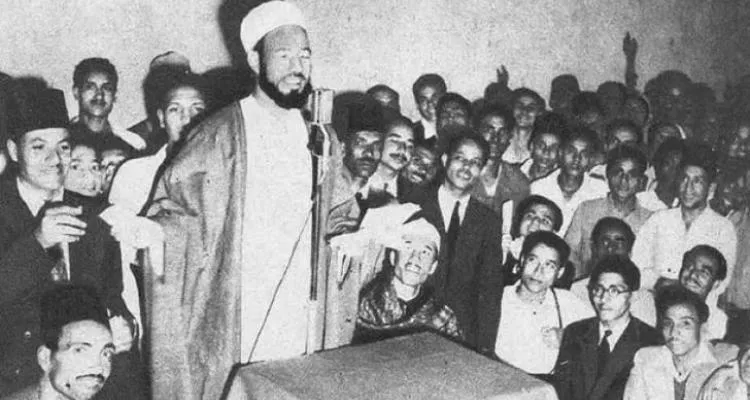
In that historical moment, Imam Hassan al-Banna, may Allah have mercy on him, moved with a profound sense of responsibility, seeking to awaken the Ummah, renew its bond with Islam, and rebuild the human being and society upon the values of true Islam. Thus, this reform project came as a response to an urgent need for a new revival that would return the whole nation to the comprehensive approach of Islam.
Imam al-Banna expressed this meaning when he said:
"We, O people - and this is no boast - are the companions of the Messenger of Allah, peace and blessings be upon him; the bearers of Prophet Muhammad's banner after him; who are bearing this banner just as they (the Prophet’s early companions) had raised it; who spread his religion as they had spread it; who preserve his Holy Qur'an as they preserved it; who disseminate his call as they had disseminated it; and we are Allah’s mercy to the worlds. ‘And you will surely know (the truth of) its information after a time.’ [Sad: 88]
The Nature of the Project and Its Characteristics
This project was founded upon a comprehensive understanding of Islam as an integrated system that regulates all aspects of life, without being confined to one sphere over another. Imam al-Banna affirmed this meaning when he said:
"We understand Islam in a broad and comprehensive sense that encompasses the affairs of this world and the Hereafter."
From this understanding, this approach has advanced a reformist vision based on educating the individual (on Islamic teachings), building the family, reviving the society, and constructing the Ummah, so that religion may fulfill its role in the life of all humanity.
The legitimacy of the Brotherhood's establishment and continuity stems from the message it carries, and from its conviction that seeking to please Allah Almighty and the need for being absolved of responsibility on the Day of Judgment before Him require collective action in fulfilling the obligations of the Sharia in general, and in exalting the word of Allah, Blessed and Exalted be He, in particular, based on the correct understanding of Islam. From its very beginning, this project never presented itself as a path of conflict or domination, rather as a call to guidance and reform, whose aim is the goodness of humankind, regardless of homeland or religion, drawing from the Almighty's words:
"And We have not sent you (O Muhammad) except as a mercy to the worlds." [Al-Anbiya': 107]
Imam al-Banna also affirmed the purity and integrity of this method and approach when he said:
"The call of the Muslim Brotherhood is a pure and upright call, so elevated in its integrity that it has risen above personal ambitions, scorned material gains, and left behind whims and ulterior motives."
The Universality of the Call
From its inception, this project bore a universal character. It did not stop at geographical or ethnic boundaries; rather, it addressed the human being as a human being, called for human brotherhood, and rejected all forms of racism.
In this regard, Imam al-Banna said:
"We, O people, are an idea and a creed, a system and a method; no place can confine it, no race can restrict it, no geographical barrier can stand before it, and it does not end until Allah inherits the earth and whoever is on it."
Proceeding from this conception, this approach and method affirms shared human values: justice, freedom, human dignity, respect for diversity, cooperation among peoples, faithfulness to covenants, and the pursuit of a global peace based on justice. It does not believe in racial chauvinism, rather it calls for a just brotherhood among humankind, as Allah Almighty said:
"O mankind, indeed, We created you from male and female and made you peoples and tribes that you may know one another. Indeed, the most noble of you in the sight of Allah is the most righteous of you. Indeed, Allah is All-Knowing, All-Acquainted." [Al-Hujurat: 13]
Islam as a Human Necessity
In light of the successive crises the world is witnessing, the question arises anew: Why has contemporary civilization been unable to achieve true happiness for humanity? Reality indicates that material civilization has provided the means of comfort for human beings, but it has failed to grant them tranquility. It gave them power but it did not guide them to values; it furnished them with means, but it did not direct them to ends. With this imbalance, potentials were transformed into tools of domination, the balance of justice was disturbed, and peoples were subjected to polarizations that cared little for human dignity or rights.
Hence, the great truth becomes clear: that humanity today is in need of Islam, with its value system that balances matter and spirit, links power to justice, and restores the human being to his true humanity.
The Role of the Project in Presenting These Values
In this context, this reform project presents these values in a practical and balanced form that is based on peaceful action, believes in dialogue, and seeks building bridges of understanding between peoples. This project does not see itself as standing in confrontation with the world, but as a partner in serving humanity and contributing to the building of a more stable and just future.
It also works to broaden the circles of civilizational dialogue, promote a conscious openness to different cultures, and cooperate with every sincere effort in the service of humanity. This reform project likewise gives attention to preparing generations in a balanced manner that combines identity with openness, and faith with action, enabling them to contribute positively to their societies.
Toward a More Just Global Order
This method advances a vision for more balanced international relations, based on sincere cooperation rather than conflict, and on the exchange of benefits rather than domination. In this context, Imam al-Banna said:
"There must be a new ‘politics’: a politics of cooperation and sincere, pure alliance built upon fraternity and mutual appreciation, and upon the exchange of benefits and interests among the members of the human family."
This conception affirms that true stability can only be realized under an international order founded upon justice, respect for the rights of peoples, and balance in interests.
Today, developments in reality reveal that the world is in the greatest need of these values; as current events show that humanity is in urgent need of justice, freedom, safeguarding human dignity, good management of resources, and consolidation of global peace. Amid this human and cultural turmoil, Islam - as presented by the Muslim Brotherhood - emerges as a cultural contribution that seeks to serve humanity, not dominate it, and to build a more balanced and just world.
Steadfastness in Carrying the Message Despite Hardships
The Brotherhood's steadfastness in carrying out its message was not the product of a passing circumstance; rather, it is an extension of the nature of a movement founded upon firm principles, that has faced numerous challenges, and yet remained committed to its method of peaceful reform, tarbiyah (education on Islamic teachings), and service to society.
In fact, this steadfastness is not a kind of rigidity; rather, it is firmness upon principles combined with flexibility in means and ability to adapt to changing circumstances without compromising fundamentals. This reflects a deep understanding of the nature of reformist work as a cumulative and long-term endeavor.
Throughout its history, what the Brotherhood has been subjected to - of persecution, distortion, and exclusion - has not been separate from the nature of its message and what it has carried of meanings of revival and reform; as the forces of tyranny and domination saw in it a project seeking to revive the whole nation (Ummah), liberate its will, reconnect religion to the reality of life, and restore to the human being dignity and due role. Despite the succession of hardships, the Brotherhood has remained steadfast, because it was not founded upon a fleeting interest or a temporary condition, but upon a firm idea, enduring ‘tarbiyah’, and a deep faith that the path of reform is long, and that trial is among the established ways of all calls.
Hence, this anniversary marks an occasion to introduce this call to new generations – particularly the youth – through its own sources and foundations, away from distorted images and ready-made judgments, so that they may view it with the eye of a fair-minded seeker and come to know for themselves its idea, message, and impact on the life of the Ummah.
This call, with the principles and message it carries, shall continue to perform its role as a contribution to building a world that is more just and peaceful, based upon values, human partnership, and respect for human dignity.
Dr. Salah Abdel Haq
Acting General Guide of the Muslim Brotherhood
(Wednesday, 6 Shawwal 1447 AH / 25 March 2026 AD)