

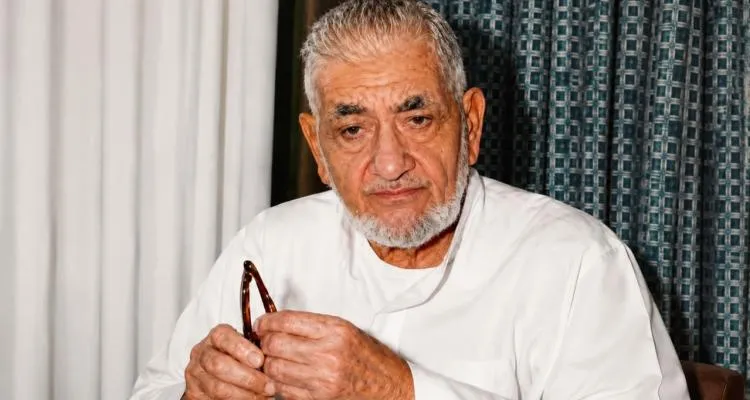
One of the Da’wa Prominent Figures.. Mr. Umar al-Tilmisani – A Guide and A Stage
In the name of Allah; praise be to Him; and blessings and peace be upon the Messenger of Allah, Prophet Mohamed (PBUH), and upon his followers.
Mr. Umar al-Tilmisani is the third General Guide of the Muslim Brotherhood (MB), who took the helm during the third stage of the various stages that the MB da’wa has gone through.
The first of these stages was the stage of inception and widespread expansion during the era of Imam Hassan Al Banna, who founded the Muslim Brotherhood as a necessity to restore the glory of Islam after he had realized that the Muslim nation had been going through unprecedented circumstances, where the nation’s unifying word had disappeared, amid the downfall of the Caliphate, the division of the nation, the replacement of Sharia (with man-made laws), and the imposition of control over most of the Muslim countries by the foreign occupation and its allies.
Amid this situation, Allah Almighty guided Imam Al-Banna to found a group that understood Islam (correctly), was educated on the basis of its teachings, and then moved to call others to it. Therefore, such da’wa (call) came as a good word and a spirit that permeated the nation, awakening hearts, appealing to innate human nature, correcting misunderstandings, and stirring zeal and fervor. The MB da’wa resonated with the masses in cities and villages, among students, youth, farmers, workers, intellectuals, and the common people – as if its logic had found a receptive heart and taken root.
The second stage was an attempt to stifle and abort the MB movement, as the palace (during the Egyptian Kingdom era) and the occupying British forces watched, lying in wait, this new spirit spreading among the people. Initially, they had said, "What can a calligraphy teacher possibly do?!" – as they used to refer to Imam Hassan Al-Banna as such. Then, they began to notice what most things that infuriated them about this da’wa, most prominently:
The principle of comprehensiveness, which dismantles the efforts exerted by Islam's enemies to isolate religion from life and politics, confining it to the mosque alone;
The principle of universality, which undermines their efforts to instill ethnic, regional, and geographical tendencies, hoping they would replace the Islamic bond, or weaken and dissipate it;
The restoration of religious authority in favor of the Quran and Sunnah as the ultimate authority, which dismantles the fascination they imposed on our people with everything coming from the West – ideas, cultures, and traditions – which they used to view them as unquestionable truths despite their occasional contradictions to our faith, principles, and values.
The principle of cohesion and brotherhood that unite hearts in various countries in support of Allah Almighty and His Messenger, a bond that dismantles all the schemes and plots they have hatched in pursuit of a divide-and-conquer policy; and
The wisdom in acting with moderation, avoiding both excess and negligence, in a way that resonates with people's innate nature and gently and gradually guides them towards adhering to and taking pride in the foundations of their beliefs and morals.
When the Nakba occurred in 1948, resulting in the occupation of part of beloved Palestine, the Muslim Brotherhood had no choice but to participate (in the fight), where their mujahideen (fighters) set the greatest examples of selflessness and sacrifice, witnessed by both friend and foe. At that point, open hostility began against them from the British and their collaborators. Imam Hassan Al-Banna was then assassinated, and the most severe trials against the group began. This was the second stage of the da’wa struggle, in terms of restrictions, imprisonment, abuse, defamation, and the filing of accusations and slander (against the Brotherhood and its members).
The MB General Guide at this stage was Imam Hassan Al-Hodheibi, as he and his brothers indeed served as a bulwark )against the plots hatched against the group at the time), noting that the key features of the stage were patience, steadfastness, seeking reward from Allah, and confronting two great trials that specifically accompanied this stage. In fact, they were two opposing trials, namely: the issue of announcement of ‘support’ (for the oppressor) on the one hand, and the issue of ‘takfir’ on the other (where the term ‘takfir’ denotes excommunication from Islam of one Muslim by another, that is accusing another Muslim of being an apostate.) However, Allah Almighty protected the Muslim Brotherhood from both trials (and the group was able to overcome them).
Then came the third stage that the MB da’wa went through, at the beginning of the seventies of the last century, a stage characterized by loosening the security grip (to some extent) and relative openness, as the MB members were released from prison along with the MB General Guide during the third stage, Mr. Umar al-Tilmisani, as they groped for a way to gather their livelihoods, heal their wounds, and resume their mission that was intertwined with their souls and hopes to support their religion. They were groping along a difficult and rugged path, as many people around them, including some family and loved ones, had either forgotten them or pretended to forget them, or were influenced by media slander and filled with suspicion towards them. So, the Brotherhood, along with Mr. al-Tilmisani, proceeded cautiously and deliberately, with confidence and certainty, with pride and wisdom, and with patience and tolerance. In this regard, it is to be mentioned that when some MB members complained to Mr. Umar al-Tilmisani about the offensive phrases and false accusations that some newspapers were writing and disseminating against them, he said to them: “Leave them alone... It suffices that our (the group’s) name is being mentioned among people after long absence, even if it was with insults, but Allah Almighty will inevitably reveal the truth.
At the time, Mr. Umar said: “In 1980, the Muslim Brotherhood was completely blacked out by the media, so I wanted to remind people of this pure group, which all hostile forces unjustly united to attack and defame. In fact, Allah’s ‘will’ was above all wills, so no ordeal befell this group without her emerging from it stronger, more resilient, more numerous, more sincere in its determination, and also purer in its intention to continue working for the sake of Allah.”
Mr. Umar al-Tilmisani, who spent eighteen years in the depths of prison, patiently and steadfastly, possessed qualities that were necessary for this stage, some of which may seem, at least superficially, to be in conflict with others, including: tolerance, extreme modesty, gentleness, decency and good manners, leniency with strength, firmness and boldness in speaking the truth, honesty, humility and simplicity with confidence and pride in one’s opinion.
Mr. al-Tilmisani was also distinguished by his patience, perseverance, and openness to all, while remaining proud and unwavering in his principles and the constants of his da’wa. He possessed a remarkable ability for dialogue and persuasion, and he was adept at engaging with opponents of the Muslim Brotherhood from both secular and other Islamic movements in Egypt. Furthermore, he was forbearing in the face of insults, fair, and never overlooked any positive qualities he saw, even in his fiercest opponents and those who wronged him.
Within a few years of his tenure, the preconceived image of the Muslim Brotherhood in the minds of many began to shift. A surge of interest from young people, both within and outside universities, began to emerge, with many of them vying to learn about the MB and even join it. Those young people who had only heard of the Brotherhood in its previous two phases and longed to see those who had been wronged under Gamal Abdel Nasser, especially after the 1976 setback, now flocked with love and passion to Mr. al-Tilmisani, who was dubbed the group's revitalizer. He had reorganized it after its members were released from the depths of prison during the era of Anwar Al-Sadat.
And so, the name of the MB da’wa regained its prominence and influence, not only within Egypt but also abroad in almost all nations. Then General Guide Umar al-Tilmisani and his colleagues were largely successful in building bridges of communication, trust, and affection with the younger generation, especially university students. Furthermore, he opened himself up to the community and engaged with everyone based on the principles of the reform movement, which stands in solidarity with all segments of society in spreading reform among the people.
Honesty in Allegiance
Al-Tilmisani said: “The Muslim Brotherhood recreated me from almost nothing, made me understand the taste of life, and showed me that a Muslim’s mission is not limited to the pillars of Islam only, but we must do good in all forms, and strive to save humanity from all its evils and what befalls it. Jihad is a broad concept: as it includes feeling sorrow for the state of affairs that Muslims have reached; it includes the burning zeal that prevents one from accepting or remaining silent about injustice; it includes spending one's money, time, and health on what benefits Muslims; it includes enjoining what is right and forbidding what is wrong; and it also includes loving those mujahideen who struggle and praying for their well-being if one is unable to support them or act with them.”
His Deep Appreciation for Al-Banna and Al-Hodheibi
Umar Al-Tilmisani’s love and appreciation for Imam Hassan al-Banna and Councilor Hassan al-Hodheibi was immense, as he says, speaking about Imam Al-Banna: "He is a person of noble character, who filled our souls with hope, our feelings with pride, and our senses with dignity." He used to repeat these words quoting from Imam Al-Banna: “The Muslim’s mission is to reach the level of Ostathiyat al-Aalam or ‘professorship of the world’, but it is not a professorship or mastery of arrogance and domination, rather it is a professorship of education and guidance.” He also used to say: “Imam Al-Banna was a good speaker, by virtue of his work (as a teacher) and position, but Councilor Al-Hodheibi was more inclined to silence, also by virtue of his work and position, as a judge listens more than he speaks. Imam Al-Banna was always smiling, but Councilor Al-Hodheibi had a stern appearance, reminiscent of the judge's chair he was accustomed to sitting in; and his most frequent prayer was: "O Lord, make me worthy of Your obedience." In fact, Allah's favor upon the Muslim Brotherhood was immense in choosing Councilor Hassan al-Hodheibi as the group’s General Guide at the time in a period which demanded patience, resilience, and endurance.
It’s by the grace of Allah
Mr. Al-Tilmisani said: “One of my sweetest and most precious memories is that I saw myself, on the path of the Muslim Brotherhood, as a person with a meaningful existence in this life. And it is by the grace of Allah Almighty that I did not feel distressed in prison, as I considered it to be one of Allah’s decrees that cannot be changed. I thanked Allah for His kindness in being sent to prison for a charge that honors me and which I consider a badge of pride, and I did not enter prison for a crime that would tarnish my honor or diminish my worth. What a great closeness to Allah Almighty to be harmed for His sake! How could I have attained this were it not for Allah's grace and His enabling me to follow this path? It is the glory of this world and the happiness of the Hereafter. Years passed and I spent seventeen years of my life in prison, and I am not sorry for what happened, but I am very grateful to Allah Almighty that He made me stand firm through that ordeal without bowing my head to an oppressor.”
To Conclude
After this third stage came two more stages, namely, the stage of exhaustion during the reign of Hosni Mubarak, which is a little less than the attempted abortion in the case of Gamal Abdel Nasser’s era. Though this phase started quietly, it ended with military trials and election rigging. Then came the current stage, which is the attempt at eradication, by inciting the Zionists and the West and using them against the group.
How much injustice do our brothers and sisters, both inside and outside the bars, endure at this stage?! Indeed, the entire Egyptian people, and even the entire nation, are also exposed to such injustice. But it is the da’wa (call) of Allah Almighty, and the ‘example of a good word being like a good tree, whose root is firm and whose branches reach up to the sky’.
However, Allah Almighty says in Surat Al-Saff: ﴾ They want to extinguish the light of Allah with their mouths, but Allah will perfect His light, although the disbelievers dislike it. ﴿ (A-Saff: 8)
Dr. Salah Abdel Haq
Acting General Guide of the Muslim Brotherhood
(Friday, 3 Dhul-Hijja 1447 AH, 20 May 2026 AD)