
War Against Iran Is a Prelude to the “Greater Israel” Plan
Our nation is going through a delicate phase today, where wars intersect with projects to reshape the region; and where feelings of concern about the fate of the Muslim peoples are mixed with feelings of anger at the injustice inflicted upon them.
At such moments, the voice of emotion rises in people's hearts, but the nation is then in dire need of the insight that distinguishes between the appearance and reality of events.
In fact, the Holy Quran has taught us to view events through the scale of wisdom, as Allah Almighty said in Surat Yusuf: ﴾Say, "This is my way; I invite to Allah with insight, I and those who follow me. And exalted is Allah; and I am not of those who associate others with Him". ﴿ (Yusuf : 108)
Therefore, understanding what is taking place in our region today requires a deeper reading of events than simply dwelling on their surface, in terms of looking beyond them at the shifts in the balance of power and the course of history.
In the world of politics, wars are not interpreted solely through their immediate appearance, but also through the far-reaching shifts in the balance of power that they pave the way for. Often, declared battles are merely a gateway to larger projects through which the region could be reshaped and its maps of influence could be rearranged.
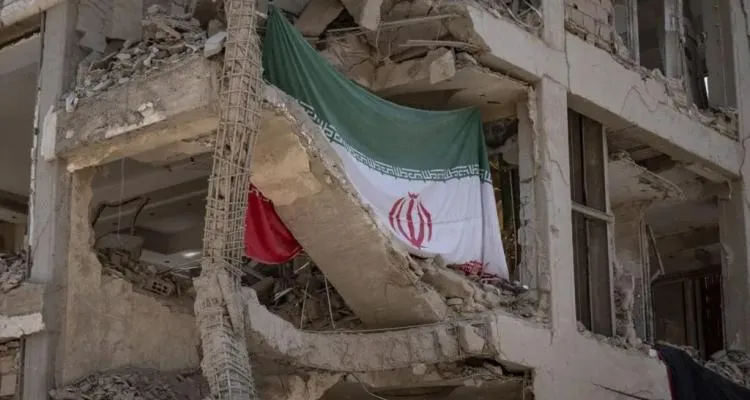
Hence, the escalating talk of the Zionist, American confrontation with Iran should be read in a broader context related to the future of the region and the nature of the projects competing to shape it.
From this standpoint, this message comes as an attempt to understand what is happening, and to consider whether the war on Iran is merely a passing confrontation, or it is a step in a broader project to reshape the region and consolidate the Israeli supremacy within it.
To begin with, Islamic Sharia establishes a clear principle in relations between nations and peoples, which is the prohibition of aggression and the obligation to repel and confront it. In the legal sense, aggression is any attack that occurs against land, a person, or property without right, whether such aggression is committed by an individual, a group, or a state. In this regard, the texts of the Holy Quran and the Prophet’s Sunnah stress this principle:
Allah Almighty said in Surat Al-Baqarah: ﴾ Fight in the way of Allah those who fight you but do not transgress. Indeed. Allah does not like transgressors. ﴿ (Al-Baqarah : 190). Also, Prophet Mohammad (peace be upon him) said in Hadith Qudsi, relating from his Lord (may He be glorified):“O My servants, I have forbidden oppression for Myself and have made it forbidden amongst you, so do not oppress one another…” [related by Muslim]
In fact, a legalistic reading of events (based on Sharia) does not merely offer a moral judgment on the facts but also attempts to understand the laws that govern the dynamics of conflict between nations.
Accordingly, any aggression against a land or people without right is an unacceptable act of aggression that must be condemned, regardless of any political calculations or sectarian disputes. A Muslim's stance on aggression is not a selective one governed by alliances, but rather a principled stance based on justice and supporting the oppressed.
At the same time, the Sharia stipulates that any state subjected to aggression has the right to defend itself by repelling the aggression, while adhering to the Islamic rules of war that prohibit targeting civilians or attacking civilian facilities unrelated to military operations.
Since this is the legal standard for viewing aggression, then understanding what is going on in the region is only complete by reading the political and strategic goals behind such conflicts.
No war in the Arab and Islamic world can be understood in isolation from the broader context of regional reshaping. The successive conflicts of recent decades have revealed ongoing attempts to realign power dynamics in order to achieve regional hegemony.
In this vein, the leaders of the Israeli occupation often reiterate in their political discourse, clear references to a project of "restructuring the Middle East" in a way that guarantees the Israeli supremacy for decades to come, which intersects with ideological arguments in Zionist thought that speak of the so-called “Greater Israel” plan.
Hence, the war against Iran is only a a step within a broader project aimed at weakening the major regional powers and reshaping the region in a way that enhances Israel’s supremacy and gives it a leading position in its regional arrangements.
In fact, the stance of the Muslim Brotherhood on colonialism was never a passing stance, but rather an integral part of the group’s vision since its inception. The group was founded (1928 AD) at a time when most of the Arab and Muslim countries were under the yoke of foreign occupation or colonial influence. So, one of the group’s primary objectives of its Da’wa was to liberate the nation from political, military, and cultural dependency.
Imam Hassan Al-Banna emphasized that one of the MB goals was to liberate the Islamic homeland from all foreign domination. This position was not limited to theorization, but was practically embodied in supporting national liberation movements, and in the participation of the MB volunteers in defending Palestine in 1948, as well as in the Suez Canal fights in 1951 and 1953.
Current developments clearly demonstrate the need for all Arab and Islamic countries to prioritize achieving strategic independence, both militarily and economically, from any external influence, and to develop mechanisms for coordination and integration among themselves, to enable them to confront Israeli threats and the dismantling and hegemony projects. In fact, the Islamic world possesses the human and economic resources that qualify it to build a system of cooperation that could contribute to protecting its interests and enhancing regional stability.
At such historical moments, attention should be directed to the true sources of tension. Experience has shown that the outbreak of conflicts in the region often weakens the countries surrounding the Zionist entity and preoccupies them with conflicts that drain their resources. Therefore, one should be careful not to widen the scope of war in a way that harms the peoples of the region and deepens the division within the Islamic world.
We commend the Arab leaders who wisely managed events, avoiding being drawn into a war whose extent only Allah knows. Everyone knows that the enemy is one, and its goal is clear: to achieve its “Nile to Euphrates” dream. This will only happen by creating chaos in the heart of our Arab homeland, dragging it into wars that drain its resources, destroy its gains, and violate its land. Therefore, adherence to wisdom and prioritizing reason is paramount now, as well as avoiding being drawn into what the enemy is pushing us towards. Duty dictates that each of us, peoples and governments alike, stand united in defense of this nation's resources and the future of its children.
Both the texts of Islamic Sharia and the experiences of history confirm that a nation’s strength lies in its unity and the consensus of its people. Allah Almighty said in Surat Al-Anbiya: ﴾Indeed this, your Ummah [Sharia or religion] is one religion, and I am your Lord, so worship Me. ﴿ (Al-Anbiya : 92). He, Almighty, also said in Surat Al-Imran: ﴾And hold firmly to the rope of Allah all together and do not become divided. And remember the favor of Allah upon you - when you were enemies and He brought your hearts together and you became, by His favor, brothers. And you were on the edge of a pit of the Fire, and He saved you from it. Thus does Allah make clear to you His verses that you may be guided. ﴿ (Al-Imran : 103)
Hence, one of the most significant duties in times of crisis is to bring the ranks closer together and prioritize commonalities among Muslims, as well as managing political and sectarian disputes with a spirit of wisdom and responsibility.
Amid these transformations, the deeper truth remains: the nation does not derive its strength from material factors alone, but also from its connection with Allah Almighty and its adherence to His path. History has taught us that times of hardship have always been moments of reflection and boosting of faith.
The month of Ramadan, especially its last ten days, comes as an opportunity to deepen one's connection with Allah through supplication, night prayers, and humble devotion to Him.
There are also practical duties that should be performed during this time, most prominently:
Boosting public awareness about the true nature of the conflict and avoiding being drawn into misleading propaganda.
Consistently calling for national unity and defending national values and territory.
Keeping prepared for the social and economic challenges that may arise from evolving events.
In conclusion, understanding the nature of conflict, adhering to values, and working towards national unity and cohesion are the main pillars that preserve a nation's equilibrium in times of turmoil. Nations that fail to fully grasp the nature of wars may find themselves fuel for the agendas of others.
The duty of our nation today requires all of us to be well aware, not to be drawn into sectarian polarization, and to keep the hostility compass directed towards the Zionist project.
We pray to Allah Almighty to grant victory to all the oppressed people across the world, to relieve the distress of the Palestinian people, to free the captives in the injustice prisons, to protect the nation from all trials, both apparent and hidden, and to unite its word on the truth.
Allah is the greatest, and praise be to Allah,
Dr. Salah Abdel Haq
Acting Muslim Brotherhood General Guide
(Monday, 19 Ramadan 1447 AH / 9 March 2026 AD)