

Egypt and Its Historic Role... On the Anniversary of the Conquest
In the name of Allah; praise be to Him; and blessings and peace be upon the Messenger of Allah, Prophet Mohamed (PBUH), and upon his followers.
To proceed:
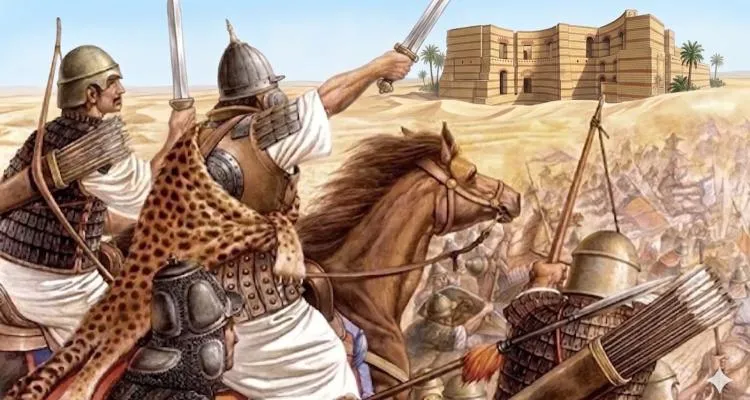
Around these days (hundreds of years ago) came the conquest of the Fortress of Babylon – located in what is known today as Old Cairo – a fortress whose fall constituted a major turning point, given its strategic location commanding the routes to Upper Egypt, the Delta, and then capital, Alexandria. The siege lasted seven months until the conquest took place in Rabi' al-Thani 20 AH / April 641 AD. Its fall dealt a crushing blow to the Byzantine presence in Egypt because of the fortress's formidable defenses. Al-Muqawqis, then Egypt's ruler, personally oversaw the fighting there; but when he became certain of his defeat, he offered reconciliation and payment of jizyah (a historically mandated tribute paid by non-Muslim subjects living under Muslim rule, serving as a fee for protection and exemption from military service). This angered Heraclius, then Emperor of the Byzantines, who summoned Al-Muqawqis, rebuked him, then dismissed and exiled him. However, the commanders of the fortress despaired of resistance, accepted payment of the tribute, and surrendered it.
Amr ibn al-As (may Allah be pleased with him) realized how difficult the conquest would be with only four thousand soldiers - the fighters with whom he had set out from the Levant to conquer the jewel of the Byzantine empire. Therefore, before heading to Babylon, he requested reinforcement from Caliph Umar ibn al-Khattab (may Allah be pleased with him), who sent him support: four thousand soldiers, with each thousand headed by a hero from among the Companions of the Prophet, namely: al-Zubayr ibn al-Awwam, al-Miqdad ibn al-Aswad, Ubadah ibn al-Samit, and Maslamah ibn Mukhallad.
Caliph Umar ibn al-Khattab wrote to his conquering commander, saying: I have reinforced you with four men, each of whom is equal to one thousand fighters; and twelve thousand (of soldiers) shall not be defeated for lack of numbers! In fact, Caliph Umar knew those heros best: the deep education they had received, the sincerity of their intentions, and the sharp resolve of their determination; and thus should the people of jihad and conquest be.
Likewise was the testimony of the delegation sent by al-Muqawqis to the Muslims, where Amr ibn al-As kept them for two days. And when they returned, they described the condition of the Muslims to al-Muqawqis, saying: "We have seen a people for whom death is dearer to each one of them than life; humility is dearer to them than elevation; and none of them has any desire for this worldly life."
When the Byzantine Roman soldiers were about to leave the fortress defeated, they poured out their rage upon their captives from among the Copts of Egypt. They beat them with whips, cut their hands off, and drove them out of the fortress. This was not surprising, given their persecution of the Coptic Orthodox Christians who differed from the Melkite doctrine of the state. Persecution had overwhelmed the Copts of Egypt to the extent that their Patriarch, Benjamin, spent thirteen years wandering as a fugitive across the deserts of the Egyptian land. When the Islamic conquest was completed, Amr ibn al-As brought Patriarch Benjamin back, honored him, and gave him ten thousand dinars to set right the affairs of the people of his faith.
The Copts had not felt secure under the rule of their partners in Christianity, because of their difference in doctrine; nor did they know justice and mercy except under the shade of the Muslim conqueror. Therefore, it is no wonder that numbers of them joined the army of Amr ibn al-As during the remaining course of the conquest after Babylon: "They repaired the roads for them, built bridges and markets; and the Copts became backers to them in what they sought of fighting against the Romans."
It is not surprising either that Amr ibn al-As conducted the conquest of the Fortress of Babylon peacefully, after al-Zubayr ibn al-Awwam and those with him had been on the verge of taking it by force. The same happened in the conquest of Alexandria – then capital of the country, which was overflowing with gold and silver – something that could have tempted the conquerors with spoils. Yet, he conducted the conquest through reconciliation in return for a specified tribute. In fact, Gustave Le Bon spoke truthfully when, after surveying the course of the Islamic conquests, saying: "History has never known a conqueror more merciful than the Arabs."
Likewise, history has never known a conqueror more just than the Muslim conqueror, nor a ruler like Umar ibn al-Khattab – where a young Copt complained to him about the son of his governor, Amr ibn al-As, who had struck him with his whip when the Copt's horse outran his, saying: Do you outrun me while I am the son of the nobles? The young Copt carried his complaint to Caliph Umar during the Hajj season. The Caliph brought Amr ibn al-As and his son before the eyes of the people, handed his whip to the young Copt, and said: Strike the son of the nobles. So, he struck him. Umar then said: Turn it upon the bald head of Amr, for his son struck you only by the authority of his father. The Copt felt shy and said: I have struck the one who struck me. Umar replied: Had you done so, we would not have stood between you and him! Umar then uttered his resounding words that became a proverb in justice and in upholding human freedom: Since when have you enslaved people when their mothers gave birth to them free?
The wonder here is not for Umar's justice, for caravans have carried his renown far and wide; rather, it is for the Copt's awareness that his right was guaranteed in the State of Islam. Thus, only a few months after the conquest of Egypt, he traveled with his case to raise it before the Commander of the Believers, so that justice might be done for him during the Hajj season before witnesses.
A similar incident took place during the caliphate of Umar ibn Abd al-Aziz, when a woman from Egypt named Fartunah al-Sawda' – In Giza – sent him a letter complaining that the wall of her enclosure had collapsed and that her chickens were being stolen. Caliph Umar ibn Abd al-Aziz then wrote to his governor in Egypt, ordering him: "To proceed: Fartunah al-Sawda' has written to me complaining that her wall has been demolished and that her chickens are being stolen. When this letter of mine reaches you, ride to her yourself, build her wall, and fortify it for her as you fortify your own walls!" The governor complied with the Caliph’s order, went out with his procession to Giza, asked for Fartunah’s house, built the wall, set her affairs right, honored her, and gave her what would suffice her, from the public treasury.
The (Muslim) conquerors never knew coercing those who differed with them into entering Islam. Allah Almighty states: "There shall be no compulsion in [acceptance of] the religion. Verily, the Right Path has become distinct from the wrong path…" (Al-Baqarah: 256). Indeed, the spread of Islam in Egypt is itself sincere evidence that it is a religion of persuasion and guidance, not coercion and oppression. Its spread was gradual and deep, where the majority of Egyptians did not become Muslims until three centuries later, in the Fatimid era.
The conversion to Islam by the people of Egypt made them part of the system of the one nation, and of the abundant civilization stretching across East and West, so that they would play an enduring role in history. They (the people of Egypt) resisted the Crusader aggression against Egypt and the Levant, which ravaged Muslims and the Christians of the East alike. Setting out from Egypt, Salah al-Din (Saladin) conquered Bayt al-Maqdis and restored the al-Aqsa Mosque, the Church of the Holy Sepulchre and the cradle of Christ. His justice toward the defeated Crusaders remains a proverbial example and a source of amazement.
Also, the Mamluks set out from Egypt and smashed the barbaric aggression of the Mongols; thus saving the humanity from their evil.
Egypt also bore the honor of resisting the Zionist tide, where its people confronted the falsification of the collective consciousness of the nation, and the calls for normalization and humiliation. Their hearts remain attached to Jerusalem and the land of Isra’: "…And Allah has full power and control over His Affairs, but most people know not" (Yusuf: 21).
Egypt has had its glorious role since its conquest. The conquest armies set forth from Egypt to remove the injustices of the Romans off North Africa. Egypt was the base of the conquest before the building of Kairouan, and the source of reinforcement for the conquerors after its construction. From Egypt, al-Azhar spread the message of Islam and the Arabic language across the world. Within al-Azhar, the riwaq (portico) of the Levantines stood alongside the riwaq of the Maghrebis and the other riwaqs of neighboring students of knowledge. Egypt was the destination of scholars traveling from the Islamic East to Africa and Andalusia, and of those coming from them to the East for knowledge, trade, and Hajj. It was the route of pilgrims and students of knowledge from Central, Southern, and Western Africa to the Hijaz and the East. In Egypt, al-Shatibi, Ibn Khaldun, al-Qarafi, and al-Qurtubi settled; and in it al-Shafi'i, Ibn Hajar, and Ibn Taymiyyah disseminated their knowledge. It was the refuge of the scholars of Baghdad after its fall at the hands of the Mongols, and of the scholars of Andalusia after their state was lost at the hands of the Christians of Europe. Across Egypt’s land, the Muslim Brotherhood movement extended, reviving the zeal of Islam, the vigor of religion, the humility of worship, the moderation of thought, and the light of guidance – where it was a refuge for freedom-seeking students rising against colonialism in Africa and Asia; and the Brotherhood House in Cairo was the platform of their leaders and the destination of their delegations.
The Arab and Islamic world has lost so much because of the retreat of the Egyptian role, with all that it represents of a unifying strategic and intellectual reserve. Diminishing that role has been an objective of the enemies of the nation and those plotting against it. Indeed, restoring the Egyptian role is undoubtedly the mission of the noble and the sincere people. Egypt is capable, Allah willing, of restoring its leadership once again, to be – as it has always been – the pillar of the camp of Islam and the axis of its civilization. This is its destiny and the destiny of its people: they are in ribat (being stationed on the frontlines for protecting the whole nation) until the Day of Resurrection; they are a source of rage to the enemies and a discipline for the disobedient; and Allah does not allow to be lost the reward of those who do good.
And our final supplication will be, “Praise be to Allah, Lord of the Worlds!”.
Dr. Salah Abdel Haq
Acting Muslim Brotherhood General Guide
(Tuesday, 4 Dhul Qi’da 1447 AH / 21 April 2026 AD)